
Energy Audits
Electrical Safety & Power Quality Audit
Electrical safety audits and power quality/harmonic assessments to reduce risk and improve system efficiency.
Identifies unsafe conditions early
Improves power quality
Reduces electrical losses
Recognise the Problem
Electrical panels, connections, or switchgear haven't been formally inspected for heat, resistance, or overload signs in some time.
You've had motors with shortened life or gradually rising energy costs that haven't been traced to a cause.
You suspect harmonic distortion could be a factor in your plant but haven't had power quality specifically assessed.
Your last electrical review was a compliance checklist only, not a combined safety-and-efficiency assessment.
Here's what that looks like in practice — what we investigate, how we assess it, and what you'd typically find:
What We Inspect
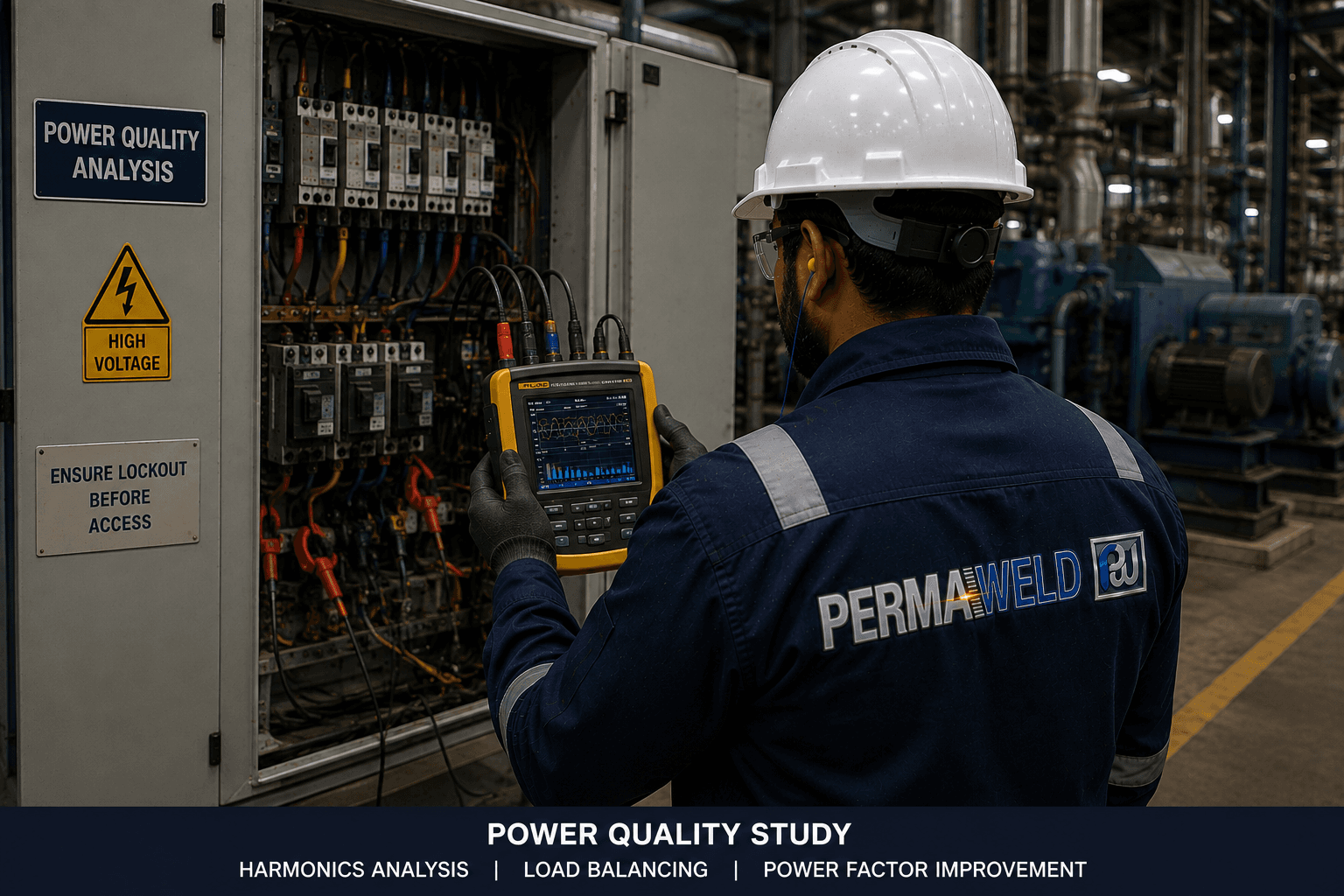
Electrical panels, connections, motors, switchgear, and distribution equipment across your plant.
What We Find
Unsafe conditions, overloaded circuits, and — where relevant — harmonic distortion reducing equipment life.
How It Helps
Combines thermography, load analysis, and inspection to catch faults building quietly before they become incidents.
Our Advantage
One audit covers both safety risk and power-quality efficiency, not just a compliance checklist.
Electrical faults rarely announce themselves loudly. They build quietly — in resistance, in heat, in wasted power — until the day they don't, and by then the choice is usually between an unplanned shutdown and a genuine safety incident.
Our electrical safety audits combine thermography, load analysis, and inspection to identify unsafe conditions and inefficiencies in your electrical distribution system, covering the panels, connections, and switchgear that keep a plant's power flowing safely and predictably.
Where harmonic distortion is a concern, we assess power quality to identify sources of distortion that reduce equipment life and increase losses — a factor that's easy to overlook because its effects show up gradually, as shortened motor life and higher energy costs, rather than as a single obvious failure.
Recommended Next Step
Findings on unsafe conditions and power-quality efficiency, not just a compliance checklist — information you can use to decide the next step.
Discuss My PlantWhere this service is commonly used
Related energy audit services
Electrical Safety & Power Quality Audit — Frequently Asked Questions
What is an electrical safety and power quality audit?
It combines thermography, load analysis, and inspection to identify unsafe conditions and inefficiencies in a plant's electrical distribution system, including harmonic distortion where relevant.
Why is this audit important for industrial plants?
Electrical faults build quietly — in resistance, heat, and wasted power — until they cause a safety incident or a failure.
How is the audit performed?
Engineers inspect electrical panels, connections, motors, switchgear, and distribution equipment, combining thermography and load analysis, and assess power quality where harmonic distortion is a concern.
Which industries use this service?
It's used across automotive, pharmaceutical, and process manufacturing plants where electrical reliability and safety both matter.
What information does the customer receive?
Findings cover both unsafe conditions and power-quality efficiency, not just a compliance checklist.