
Energy Audits
Steam System Audit
Boiler-to-point-of-use steam system audits covering generation efficiency, distribution losses, and trap performance.
Cuts fuel and water waste
Backed by TLV steam engineering
Findings quantified in rupees
Recognise the Problem
Your fuel bill for steam generation feels high relative to production, but nobody has traced exactly where it's going.
You have visible steam leaks, uninsulated piping, or insulation that was removed for a repair and never replaced.
Your steam traps haven't been tested recently, or you suspect some may have failed.
Boiler combustion efficiency hasn't been checked against its original baseline in some time.
Here's what that looks like in practice — what we investigate, how we assess it, and what you'd typically find:
What We Do
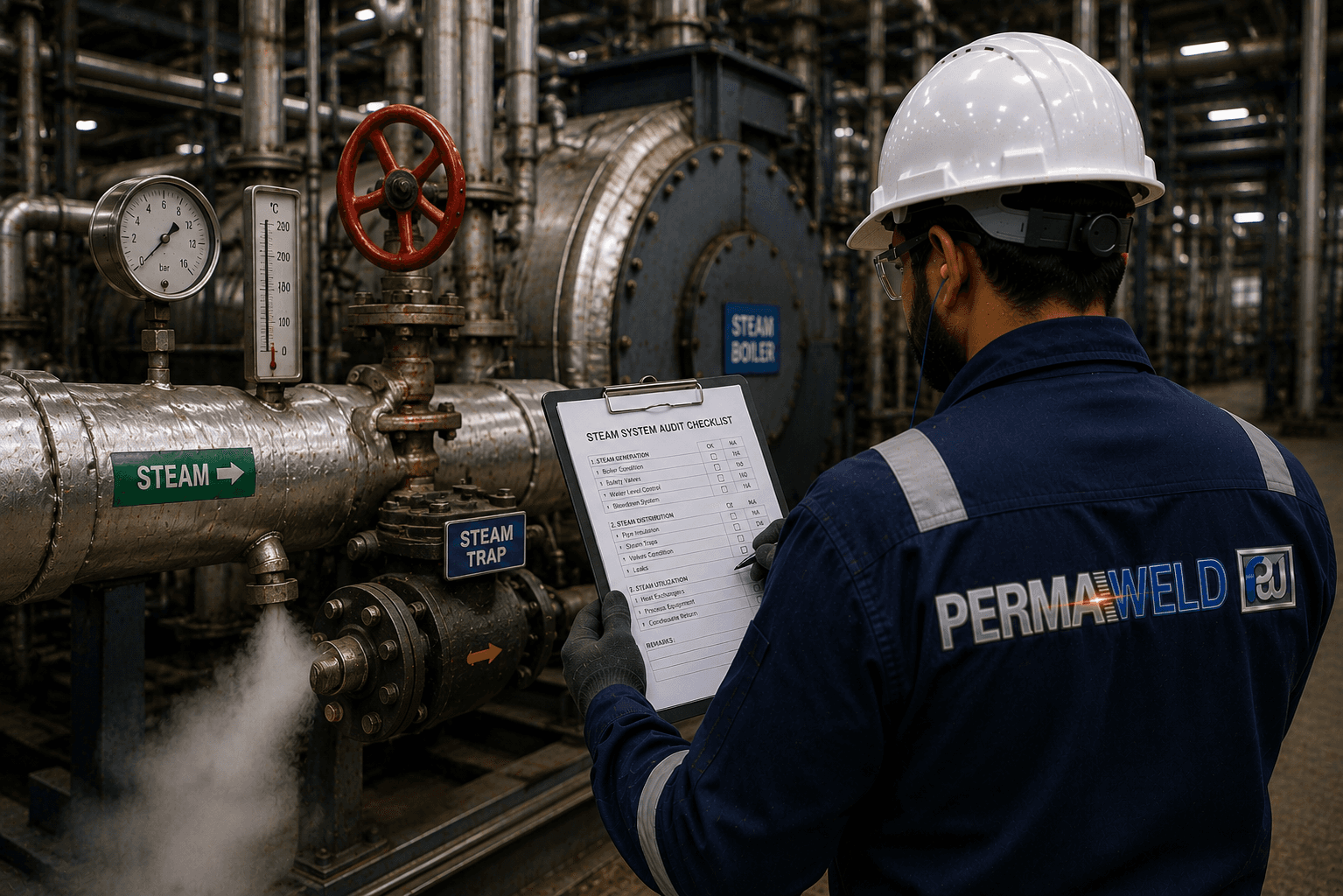
Audit the full steam path — boiler combustion efficiency, distribution insulation, condensate recovery, and steam trap performance.
What We Find
Where fuel and water are being wasted, from combustion inefficiency to leaking traps and uninsulated piping.
How It Helps
Plant management gets a fuel-cost-quantified, prioritized list of what to fix first.
Our Advantage
Reinforced by our principal partnership with TLV, a 70+ year Japanese steam engineering specialist.
Steam is invisible until it's gone — and by the time it shows up on the fuel bill, a plant has already paid for months of it. Unlike a visible leak, wasted steam rarely announces itself until someone is specifically looking for it.
Our steam system audits examine the full steam path — boiler combustion efficiency, distribution insulation, condensate recovery, and steam trap performance — to identify where fuel and water are being wasted, since a loss at any single point along that path quietly compounds with every hour the plant runs.
Our steam-system expertise is reinforced by our principal partnership with TLV, a Japanese manufacturer with 70+ years of steam engineering focus, giving us access to purpose-built steam components alongside our own audit findings — so a recommendation isn't just a diagnosis, it comes with a proven engineering solution behind it.
Findings are quantified in fuel-cost and rupee terms so plant management can prioritize corrective action based on actual financial impact rather than guesswork about which part of the steam system deserves attention first.
Recommended Next Step
Findings on where fuel and water are being wasted along the steam path, quantified in fuel-cost and rupee terms — information you can use to decide the next step.
Discuss My PlantWhere this service is commonly used
Related energy audit services
Steam System Audit — Frequently Asked Questions
What is a steam system audit?
A steam system audit examines the full steam path — boiler combustion efficiency, distribution insulation, condensate recovery, and steam trap performance — to identify where fuel and water are being wasted.
Why is a steam energy audit important?
Steam is invisible until it's gone, and by the time a loss shows up on the fuel bill, a plant has already paid for months of it.
How is a steam system audit performed?
Engineers audit boiler combustion efficiency, distribution insulation, condensate recovery, and steam trap performance, reinforced by our principal partnership with TLV, a Japanese steam engineering specialist with 70+ years of focus.
How does this differ from a steam trap survey?
A steam system audit covers the whole steam path including combustion and insulation, while our steam trap survey specifically tests every trap for failure. The two are complementary.
Which industries use this service?
Steam system audits are used in refineries, power generation, tyre manufacturing, pharmaceuticals, and paper and pulp processing — any plant running steam-intensive processes.
What information does the customer receive?
Findings are quantified in fuel-cost and rupee terms so plant management can prioritize corrective action.